Fantastic Five
The five foods below are often forgotten about but have the potential to make a big difference to our health. They might not be your classic comfort foods but just a little of these five, if eaten on a regular basis, can do you the power of good.
1. CHIA SEED

The mighty chia is a complete protein with all the essential amino acids, making it a great source of protein. It contains more calcium than milk and is a source of iron and soluble fibre.1 Soluble fibre is beneficial to us as it ferments in the intestines providing food, in the form of Short Chain Fatty Acids (SCFAs), for our friendly gut bacteria. This is important for a healthy gut.2 Other good sources of soluble fibre are sweet potatoes, carrots and other root vegetables, green leafy vegetables, fruits with the peel like apple and pears, berries, seeds and nuts.
Chia seeds are tiny black and white seeds which are best eaten once you have soaked them for about 10 minutes in filtered water or nut milk. They will form a gelatinous consistency but don’t let that put you off. You can add them to anything you like such as breakfast muesli, soups, smoothies or make chia pudding. You can store your chia in the fridge once soaked and add a couple of spoonfuls to your food when you fancy.
You can also use chia as a binder in cakes as an alternative to egg. You can buy ground chia for this or just soaked the whole seeds and add to your recipe.
2. SPROUTED SEEDS
I don’t mean brussel sprouts, but sprouted seeds and pulses. Sprouts can be eaten all year round as they are easy to grow in your kitchen. This means cold weather or living in a small apartment in the city doesn’t affect your ability to sprout these little gems. There are many different types of sprouts but here are a couple of my favourites.
Remember to buy organic raw seeds that have not been heated.
Sunflower Sprouts
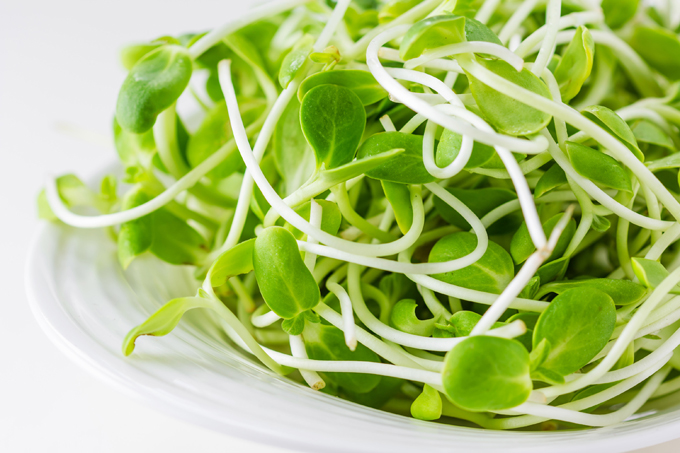
Sunflower Sprouts
Sunflower sprouts are really versatile and can be added to salads or smoothies, juiced or use as a topping for any savoury dish. The vitamin content of seeds increases when you sprout them and are much more beneficial than the dry seed. Sunflower sprouts have 8 of the 9 essential amino acids and contain an array of B vitamins including folic acid, which makes it an excellent sprout to eat pre, during and after pregnancy. They are also rich in antioxidant vitamins C & E, magnesium, potassium, selenium and zinc.
Sunflower sprouts are best sprouted in soil but this is still very easy to do in a small tray that you can keep on your window sill.
Fenugreek sprouts
I like them because they are very easy to eat without a particularly strong taste and they are simple to sprout as they don’t need soil and only take a few days.
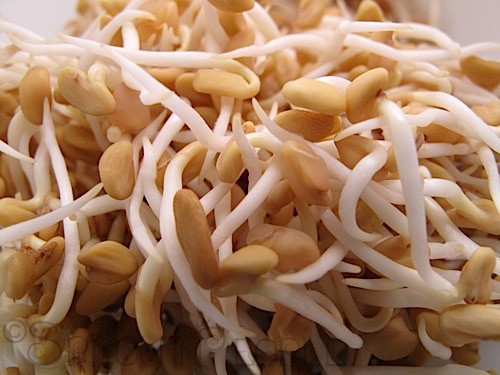
Fenugreek Sprouts
Fenugreek is a rich source of many vitamins and minerals one of which is iron. Due to the rich source of iron it is a wonderful sprout to eat if you are anaemic as it ‘feeds’ the blood and is perfect for women during their period.
Monks of the middle ages used fenugreek to treat blood poisoning, failing eyesight and liver and kidney problems.
Here is a video to show you how to sprout your own seeds.
More ideas of what to sprout: buckwheat, pea, wheatgrass, mung beans, aduki beans, broccoli seeds and lentils.
3. KALE
One of the reasons kale is great for us Brits is that it grows well in cold weather. Now I know some of my readers live in warmer climates, but you’ll be pleased to know it grows well there too, as long as it’s not too tropical.
About 70 grams of kale contains only 33 calories and yet packs in a powerful amount of nutrients that will keep an ironman athlete happy. With your 70 grams of kale you’re getting 9% of the daily value of calcium, 206% of beta carotene (some of which will be converted to vitamin A), 134% of vitamin C, and a gigantic 684% of vitamin K. It is also a good source of minerals including copper, potassium, iron, manganese, and phosphorus.
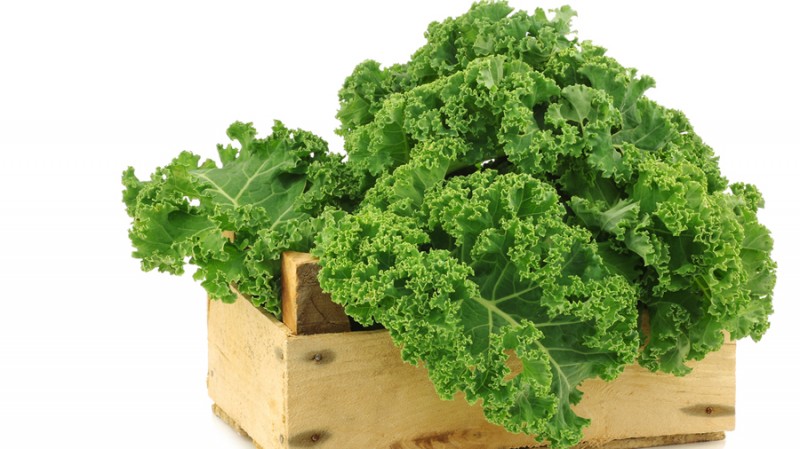
Raw Kale
Kale is an excellent source of sulphur-containing phytonutrients which are needed for collagen synthesis and to give skin structure and for effective liver detoxification, amongst other things. You’ll also find sulphur in garlic, onions, chives and leeks.
Kale can be quite a tough leaf if eaten raw, so make sure you remove the tough middle stem if your leaves don’t come ready chopped. Here is a recipe from my blog for you to try. Cooked kale is still good but it’s best to steam it for a short time or put it into your soup towards the end of the cooking process so it softens the leaf slightly without loosing the nutrient content. Water soluble vitamins, such as vitamin C and some B vitamins, are sensitive to heat.
I personally don’t juice kale, spinach, collard greens and broccoli as they contain goitrogens. You could end up consuming a higher amount if you juice these vegetables so I would stick to a range of other vegetables for juicing and eat your goitrogenic vegetables whole. I know some people express concern about kale and other goitrogenic foods and the impact on the thyroid. You would have to chomp through a fairly large quantity of these vegetables to have a negative impact, however, I would always recommend rotating your vegetables and eating seasonally, so you don’t eat the same vegetables all year round. If you’re concerned you can lightly steam your vegetables which reduces the goitrogenic properties.
4. SPIRULINA
Spirulina is an algae which is available to buy in tablet or powder form. It is cellulose-free making it easily digested and absorbed by the body. There are other nutritionally dense algaes, such as chlorella, but I have chosen spirulina as it’s the cheapest.

Spirulina as tablets and powder.
Spirulina is 65% protein and contains all the essential amino acids making it a complete protein. It will help support lean muscle tissue growth and repair, maintain healthy insulin levels, support the immune system, facilitate vitamin, mineral and hormone transport around the body and help maintain healthy blood pressure.
Add to this the bio-available iron, B vitamins, calcium, vitamin E and a host of minerals and you can see why spirulina is so beneficial. I always used to keep it in the office when I worked in London and was really tired! It’s really handy when you’ve had a few too many drinks because it supports the liver in the detoxification process.
I find spirulina particularly useful if I don’t have access to my usual foods, such as when I’m on holiday, or when I have a busy day and haven’t had time to prepare my food fresh. Spirulina is great to take on a plane, especially a long haul flight when the food is devoid of any goodness.
I use the Synergy Natural Organic Spirulina tablets which are grown in Australia. Alternatively you can add spirulina powder to your smoothies although it does have a fairly strong taste. Hawaiian spirulina is another good organic source. Always check where your spirulina was grown and if you can’t find this information easily then I’d be very cautious about taking it. Spirulina should be certified organic.
Note: Spirulina can contain varying levels of iodine, depending where it is grown. Although iodine is a vital element for the thyroid, too much of it can disrupt thyroid function. I would suggest checking the iodine levels with the manufacturer and starting with a lower dose. Taking more of something doesn’t always make it more therapeutic.
5. WATERCRESS

Fresh watercress
The unassuming watercress is easy to mistake for other less nutritious leaves but can always be distinguished with its peppery taste. Watercress is part of the cruciferous family of vegetables which are known for their glucosinolate content. These glucosinolates have a protective effect against cancer due to their ability to support detoxification against potential cancer-causing substances. Watercress contains high levels of antioxidants to protect against DNA damage which could also explain the anti-cancer benefits.3,4,5
Watercress provides a high amount of K1 which, alongside vitamin D, provides support for your immune system by lowering cytokine production and reducing inflammation.6
It’s all about creating healthy habits, not restrictions.
I do hope you enjoy experimenting with these foods in your diet. If you have any questions please don’t hesitate to contact me.

- http://nutritiondata.self.com/
- Besten Gd, Eunen Kv, Groen AK, Venema K, Reijngoud DJ Bakker BM. (2013). The role of short-chain fatty acids in the interplay between diet, gut microbiota, and host energy metabolism. The Journal of Lipid Research. 54 (9), 2325–2340.
- Pledgie-Tracy A, Sobolewski MD, Davidson NE. Sulforaphane induces cell type-specific apoptosis in human breast cancer cell lines. Mol Cancer Ther. 2007 Mar;6(3):1013-21.
- Higdon JV, Delage B, Williams DE, Dashwood RH. Cruciferous vegetables and human cancer risk: epidemiologic evidence and mechanistic basis. Pharmacol Res. 2007 Mar;55(3):224-36.
- Fowke JH. Head and neck cancer: a case for inhibition by isothiocyanates and indoles from cruciferous vegetables. Eur J Cancer Prev. 2007 Aug;16(4):348-56.
- Shea MK, Booth SL, Massaro JM, et al. Vitamin K and vitamin D status: associations with inflammatory markers in the Framingham Offspring Study. Am J Epidemiol. 2008 Feb 1;167(3):313-20.
Categorised in: Foodies, Health Care, Nutritious Roots Blog
April 15, 2016 11:36 am Leave your thoughts