Part 2 It’s in the Water: Bottled Water
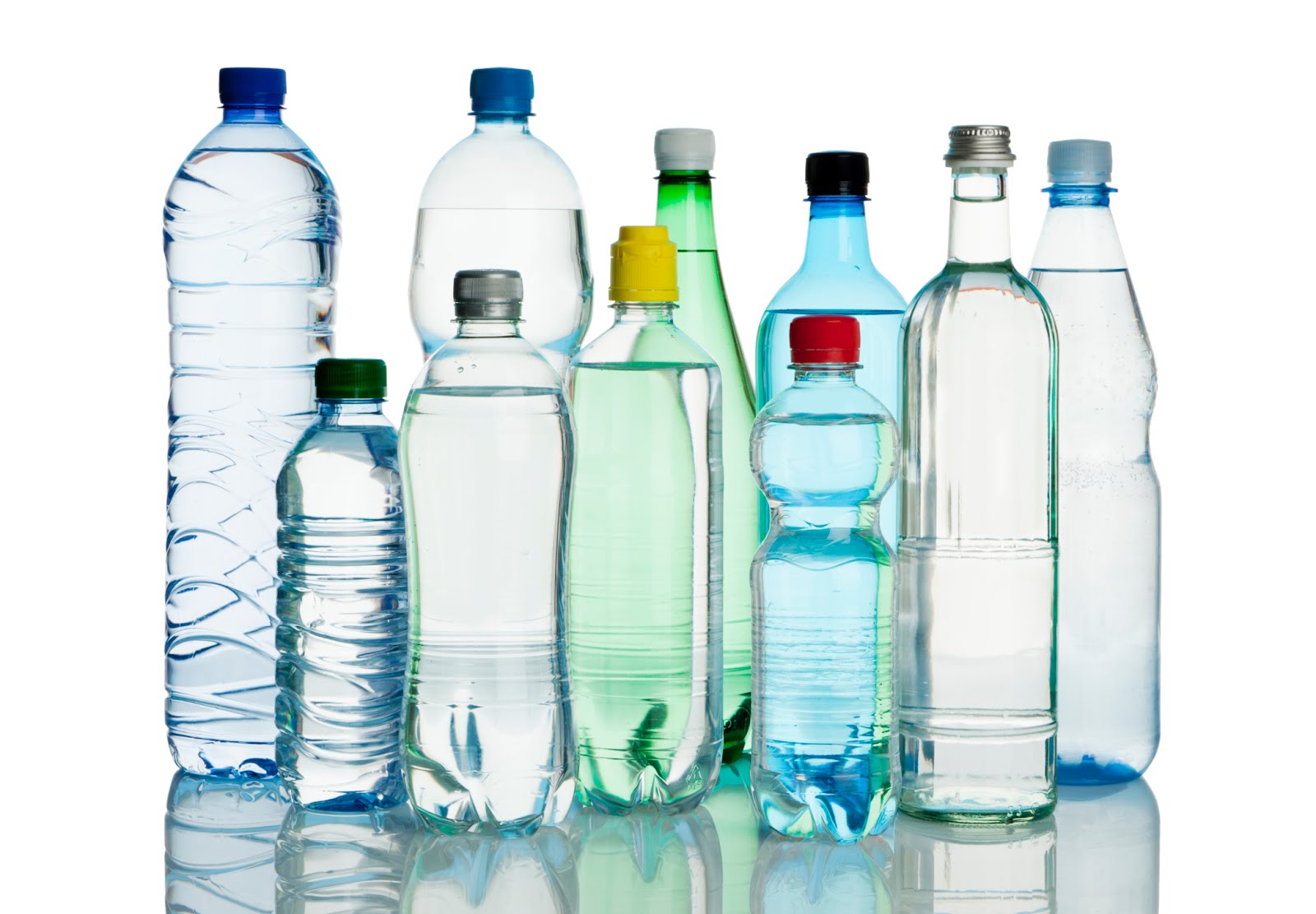
I wish I could put a positive spin on this but unfortunately bottled water presents a dismal picture for consumers and our environment. The industry has capitalised on our fears by producing bottled water. They’ve carbonated it, sourced it from the Fiji mountains and put it in fancy bottles, which when combined with expensive marketing campaigns sells billions. Sales of bottled water have grown globally at an annual average of 6% since 2008 with 238 billion litres sold worldwide in 2015.1 The global market size for bottled water is currently at £133 billion ($200 billion) and is predicted to rise in the coming years.2
The bottled water industry has marketed their product as the safe alternative to tap water. Unfortunately, consumers have been tricked into paying thousands of times more for poor quality water that is often less regulated than our tap water. For example, Aquafina and Dasani, who are huge suppliers of bottled water in the US, use municipal water which undergoes additional treatment.
With the increasing awareness of bisphenol A, (BPA) it is now much less common to find polycarbonate plastics which are known to leech BPA.15 This is especially important for baby bottles which should always be BPA free! However, even BPA free plastic bottles leach oestrogenic chemicals into the water so just because your bottle says BPA-free, does not mean it is safe.16 For example, phthalate compounds, which are used as plasticisers to increase the flexibility and durability of plastic, are endocrine disruptors capable of binding to oestrogen receptors.19,20,21 Phthalates are known to cause oxidative stress and reduce fertility in men.17 If you are drinking from disposable plastic bottles then only use it once (try to recycle it) and do not store it in a hot place such as a car. The same goes for putting hot food into a plastic container and/or heating it up in the microwave. Heating food in plastic will cause chemicals to leach,22 so it is certainly best to use a ceramic dish instead, or better still don’t use a microwave at all.
An extract from the Preventative Medicine Bulletin states the following:
The most important chemicals from plastic food packaging that can cause toxicity are styrene, 1,3-butadiene, melamine, formaldehyde, acrylamide, di-2-ethylhexyl phthalate, di-2-ethylhexyl adipate, vinyl chloride and bisphenol A. These chemicals have endocrine disrupting, carcinogenic and/or development disrupting effects. These chemicals may leach into foods depending on the chemical properties of the plastic or food, temperature during packaging, processing and storage, exposure to UV and duration of storage. Contact with fatty/oily or acidic foods, heating of the food inside the container, or drinking hot drinks from plastic cups, use of old and scratched plastics and some detergents increase the risk of leaching.18
There are rare times when bottled water is the only option, such as when you are abroad and clean water is not available. If this is the case always drink the cleanest water you can find and never allow your body to become dehydrated by planning where you will get your water.
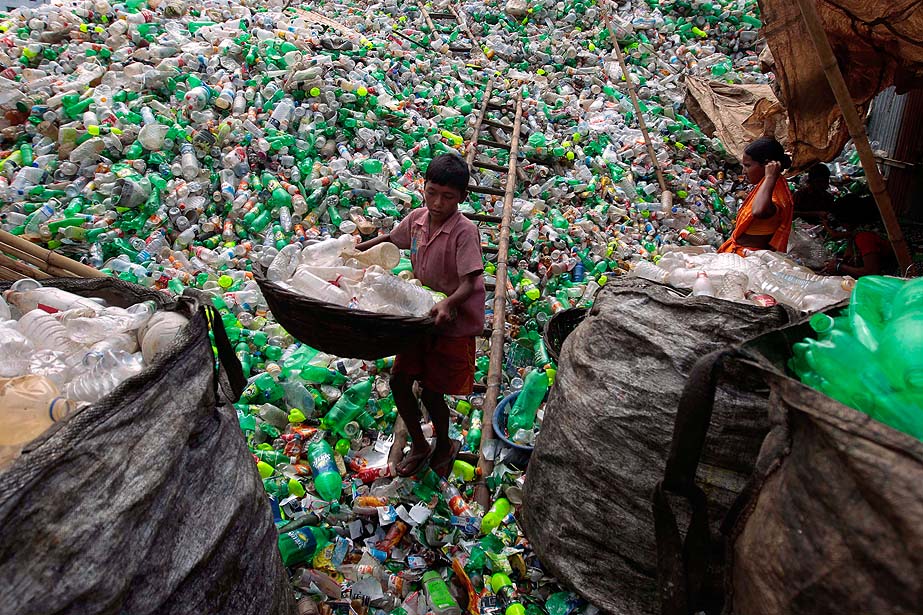
A large amount of plastic is sent to Bangladesh or India to be recycled. This photo shows a Bangladeshi child labourer carrying bottles to be recycled.
Stats from the pacific institute in 2006 showed that it takes 17 million barrels of oil annually to produce bottled water plus the fuel to haul the bottles across the world to the consumers. And then it takes 1000 years for those plastic bottles to decompose. For every 1 litre of bottled water it takes 3 litres to produce. It would seem that once you take into account the high cost, poor quality and huge environmental impact, bottled water doesn’t seem like an intelligent option. Here is a video which explain succinctly why bottled water is bad for the planet.
The Plastic Pollution Coalition encourages us to take the following steps:
REFUSE – Say NO to disposable plastics!
REDUCE – Reduce your plastic footprint: buy in bulk, choose products with the least packaging, look for products and packaging made from renewable resources, and avoid plastic packaging and containers. Choose products that have the least amount of disposable parts.
REUSE – Reuse preferably nontoxic (glass, stainless steel) containers and goods to make less waste.
RECYCLE – Recycle what you can’t refuse, reduce or reuse. Recycling is a last option because it uses energy, and there may not be a market for the refabricated materials.
For more information about how we can reduce our use of plastics, and to understand why this is SO important, I found the Plastic Pollution Coalition website extremely informative.
This brings us to part 3 of It’s in the Water which talks all about the different types of water filters to help you decide which one is right for you.
References
1. http://www.ft.com/cms/s/0/74032ec6-f495-11e4-8a42-00144feab7de.html#axzz3uU3Hfgv3
2. http://www.bloombergview.com/articles/2015-01-21/still-sweet-on-coke-and-pepsi-
4. Reed, C.D. and Tolley, J.A. Hazards from the kitchen tap. J. R. Coll. Gen. Pract., 21: 289 (1971)
5. Gettler, A.O. and Baine, J.O. The toxicology of cyanide. Am. J. Med. Sci., 195: 182 (1938)
29. Water UK Pharmaceutical residues in drinking water.
30. The Hazards of Chlorinated Water
http://www.ncbi.nlm.nih.gov/pubmed/18505928
Fackelman, K.A., Hints of a chlorine-cancer connection. Science News
Flaten, T.P., Chlorination of drinking water and cancer incidence in Norway. International Journal of Epidermiology.
http://ec.europa.eu/environment/water/water-drink/index_en.html
http://www.water.org.uk/home
http://dwi.defra.gov.uk/stakeholders/legislation/ws_wqregs2000.pdf
http://www.epa.gov/
http://www.bbc.co.uk/news/business-11813975
http://dwi.defra.gov.uk/stakeholders/guidance-and-codes-of-practice/WS(WQ)-regs-england2010.pdf
https://www.southernwater.co.uk/drinking-water-quality-standards
http://www.who.int/water_sanitation_health/dwq/chlorine.pdf
http://www.ncbi.nlm.nih.gov/pmc/articles/PMC2072844/
http://www.bt.cdc.gov/agent/cyanide/basics/facts.asp
http://www.nutritioncentre.co.uk/blog/eva-water-filter-system/
http://link.springer.com/article/10.1007/s11064-010-0376-z
https://www.banthebottle.net/articles/battle-of-the-reusable-bottles-plastic-vs-aluminum-vs-stainless-steel/
http://www.downtoearth.ie/pages.php?action=sendContactForm
http://www.bfsweb.org/onemillion/09%20One%20in%20a%20Million%20-%20The%20Extent%20of%20Fluoridation.pdf
http://pacinst.org/
http://www.bcerc.org/COTCpubs/BCERC.FactSheet_Phthalates.pdf
http://scifun.chem.wisc.edu/chemweek/polymers/polymers.html
http://www.water.org.uk/pharmaceutical-residues-drinking-water
https://dl.dropboxusercontent.com/u/299993612/Publications/Policy%20positions%20%2B%20briefings/Pharmaceutical%20residues/water-uk-position—pharmaceuticals-may-2014.pdf
http://www.rsc.org/chemistryworld/Issues/2008/September/SomethingInTheWater.asp
Tags: bottled water, environment, ethical, health, recycle, water
Categorised in: Health Care, Nutritious Roots Blog
December 20, 2015 9:55 pm Leave your thoughts