The Relationship Dance

We’ve all been there, you’re seeing a guy and you’re beginning to like him, he’s attentive, seems thoughtful, intelligent and makes you laugh. Then, just when it’s all going well and has the potential to develop into a committed relationship, he suddenly changes. Gone is the charm, the regular contact, the urgency to set up the next date and this is replaced by a kind of aloofness. You begin to wonder if you did something wrong and start to question what has changed? I’ve heard it said so many times, “I have such bad luck with men” or “I love bad boys”.
It’s a common story and most women (and some men) have been through it. In my experience it usually isn’t bad luck at all. It happens when a love addict and a love avoidant meet. It’s a perfectly codependent union that can shatter confidence and self esteem and has the potential to destroy your life if you don’t ‘wake up’. And yet through all of this, if you can see the lesson, it can be the perfect teaching platform to transform your life.
I’m writing this as it happened to me and when I look around I see it everywhere. After a string of painful relationships that have ripped my heart out, I had to put the work in to figure out why I always went for the unavailable ones with issues. The ones that seemed to love their work more than life itself, the joker in everyones company who then became cold and distant with me, the one who couldn’t say I love you, the one that wouldn’t tell his family about me, the one who was insanely jeolous and overreacted at the smallest thing, the manipulative one who projected all his negative personality traits onto me and made me feel like they were mine, the one that came up with every excuse under the sun as to why we couldn’t be officially together but perpetuated the relationship anyway. Everyone has their own stories with varying degrees of dysfunctionality, but ultimately they all share so many similarities at the core.
There are a number of traits I noticed in myself when in a dysfunctional relationship:
- I lost myself and forgot my needs.
- I became a people-pleaser towards the man and in the process ended up in situations that made me uncomfortable.
- Slowly but surely I started to accept far less than I deserved.
- Aspects of my life that were important to me and important for my self esteem were pushed to the side.
- I became anxious, highly strung and physically and emotionally tired from trying to make the relationship work.
- My friendships and work suffered as I prioritised the ‘romantic’ relationship over everything else.
- Even though the relationship was hopeless and toxic, I kept giving him one more chance, in the vain hope that he would change. They never did!
- My secondary coping mechanism (in my case it is food) kicks into overdrive and I used this as a way of numbing the pain. Whatever you use to ‘calm down’ you’ll probably notice this becomes more of a compulsion during the period of difficulty. A few examples that you might relate to are alcohol, drugs, keeping overly-busy/working, spending money on clothes and luxuries to make yourself feel better.
I worked through my issues by visiting an amazing therapist who pushed me to face things. I tried about 5 different therapists before finding a good one. The main problem I found with the others was that I wasn’t making any progress. When you’re paying a lot of money you want to get to where you need to be relatively quickly, which involves breaking down denial. Within reason you want them to give it to you straight and help you work through the emotions it brings up. The other therapists expected me to figure it all out myself while talking to me in code in a patronising tone. I got further with this therapist in my first two sessions then I had with all the others put together.
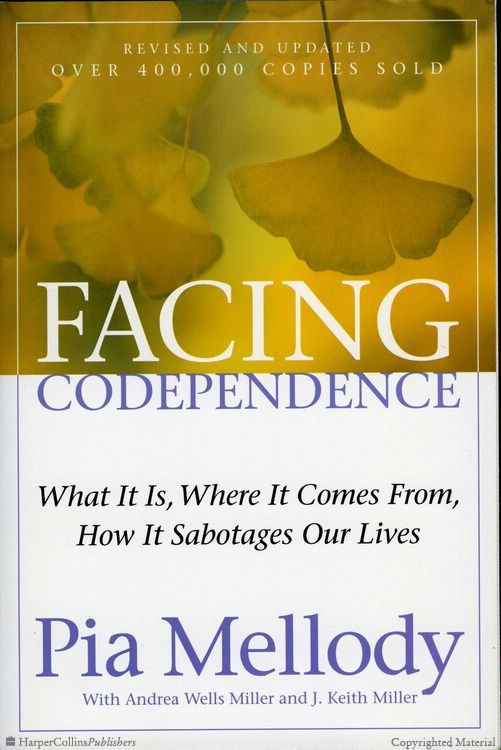
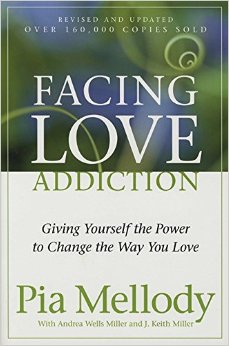
Two books that I recommend are Facing Codepedence and Facing Love Addiction by Pia Mellody. These books are easy to read, which for me was needed when in the middle of a relationship crisis and lacking the ability to concentrate on anything. Pia Mellody provides a simple theory which for me rung true. In her book she explains how love addicts have a conscious fear of abandonment leading to a very real terror of being left. This makes their behaviour become increasingly needy in a relationship. Love addicts also have an unconscious fear of intimacy leading them to choose love avoidants as partners. The opposite is true with the love avoidant, who has a very conscious fear of intimacy and an unconscious fear of abandonment.
| Conscious Fear | Unconscious Fear | |
| Love Addict | Abandonment | Intimacy |
| Love Avoidant | Intimacy | Abandonment |
The problem here is that initially it feels wonderful. You meet a man and he’s your ‘knight in shining armour’. For the love avoidant it feels perfect at first as his partner is available but doesn’t yet have the door wide open and hasn’t fallen head over heels. This is until he senses you becoming more ready and committed and then he retreats. For me this was always the kind of partner I attracted and was attracted to. I wouldn’t attract a well-balanced, emotionally available man because of my unconscious fear of a committed relationship. But the irony is that both parties want the same thing – to be loved by a partner who is present and available – but it always leads to the opposite outcome as they trigger each other to act out their dysfunctional behaviours.
This dance back and forth between the love addict and love avoidant can last months or many many years. The love addict eventually gives up trying to prize out the love and emotion she needs and retreats, causing the love avoidant to advance again for fear of losing the relationship, or he/she gives up and moves onto another partner. The love addicts fear of abandonment has been worsened by another failed dysfunctional relationship and continues to try and find someone to ‘save’ them.
After 10 years of this with various partners, I am incredibly grateful for where I am today. I have done a lot of work to figure it out and have left behind many people who were not ready to look at their behaviours and communicate honestly with me about their part. I have also made wonderful new friendships. I have become friends again with one old boyfriend who went away, did some work on himself and transformed in the process. It is quite special to see someone change dramatically from being so shut down and tormented, to this open, honest and loving person.
If you relate to this article I would encourage you to read Pia Mellody’s books as a starting point. Awareness and understanding is the first step to change. If you can find an appropriate therapist this could be beneficial. Taking a break from relationships for a while, if you’re not already in one, might also be helpful to give you the space you need to work on yourself. Lastly, never underestimate the psychological damage you could experience if you do not remove yourself from an emotionally abusive situation. Love yourself enough to leave them if it is not right. Psychology isn’t my qualification or area of expertise but this was my experience so I wanted to share.
Loving too much is when we operate as though love, attention and approval don’t count unless we extract them from a person who, because of their own problems and preoccupations, are unable to give them to us.
– Robin Norwood
Note: This is written from a heterosexual perspective throughout, however, codependence, love addiction and love avoidance can just as easily happen to any couple.
Tags: love, love addition, love avoidants, relationships, spiritualityCategorised in: Nutritious Roots Blog, Real Life
March 29, 2016 10:06 pm Leave your thoughts